Sustainability
Manchester City is proud to publish its 21st annual Sustainability Report, reflecting our continued commitment to social, environmental and economic responsibility across every part of the Club during the 2024/25 season.
GAME PLAN HEADLINES
- CO₂ emissions reduced by 25% across the year, with Scope 1 & 2 operations carbon neutral
- Energy consumption reduced by 182 tonnes CO₂, with over 1MW of solar energy generated on-site
- Water use down by 30million litres, supported by new rain gardens and advanced irrigation systems
- Waste reduced by 123 tonnes, with 100% of PET removed from Club operations
- Matchday Bus Network expanded, serving an average of 1,580 fans per game across 83 stops
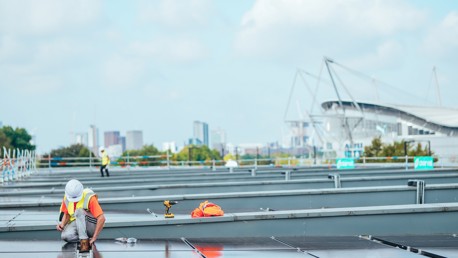
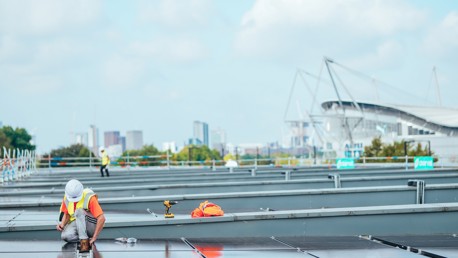
- Phase One of one of sport’s largest solar panel projects completed; powering key facilities across the Etihad Campus
OUR PRIORITIES ARE
We are committed to being net carbon zero by 2030, and to achieve this, we have identified the following areas of priority:
- Energy and Water
- Transport and travel
- Waste Reduction
- Consumables and Food
- Measurement and Reporting
- Impactful Biodiversity
- Materials
- Local, active participation
ENERGY AND WATER
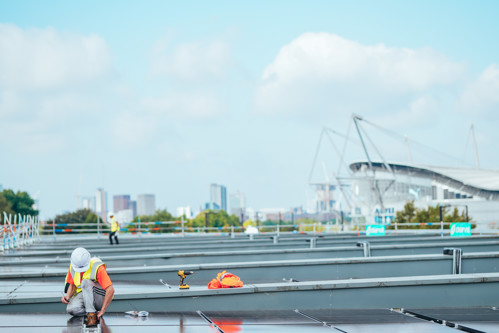
In 2025, the Club completed Phase One of its solar energy programme at the City Football Academy (CFA), generating over 1MW of renewable energy.
All other electricity used is also 100% renewable, and gas usage has been reduced by 160,000 kWh. Diesel fuel consumption dropped by 350 litres, contributing to a 182-tonne CO₂ reduction.
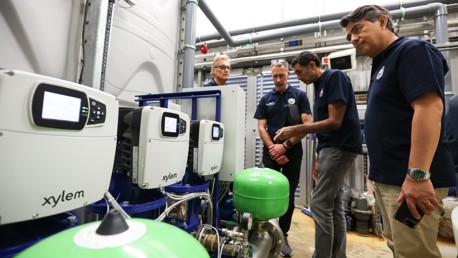
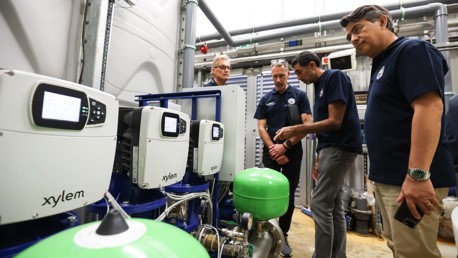
Meanwhile, the Club consumed approximately 1,210,919 cubic metres of water across the year, down from 1,334,068 cu/m — a reduction of 123,149 cu/m. This was achieved through enhanced rainwater harvesting, attenuation systems, and the introduction of 36 new rain gardens. The Club now recycles over 80% of its water.
TRANSPORT AND TRAVEL
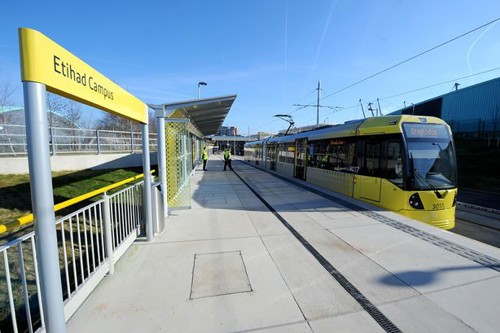
The Club’s Matchday Bus Network expanded to 15 routes, covering 83 stops and serving 1,580 fans on average each matchday. A new Express Bus Service trial proved successful, with over 600 fans using it per game, a service which continues into the 2025/26 Season.
Walking to matches also increased by 16% through the year, with a 24% rise from Manchester city centre. The City Link walking route was also upgraded with lighting, buskers, and pop-up stalls to encourage fans walking to a match.
Waste Reduction
In 2024–25, Manchester City reduced overall waste by 123 tonnes compared to last year’s 50-tonne reduction, with 71% of waste recycled and 29% recovered. The Club achieved zero landfill and continued its mission to eliminate single-use plastics and PET, remaining completely PET-free.
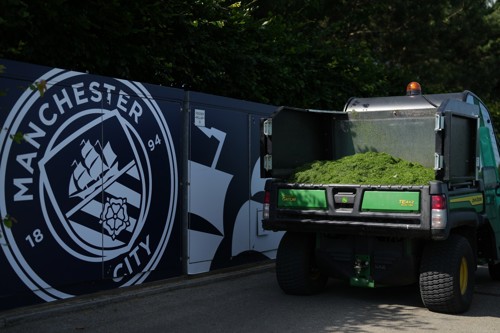
All compostable waste, including food and grass cuttings, is processed on-site and reused across CFA landscapes.
CONSUMABLES AND FOOD
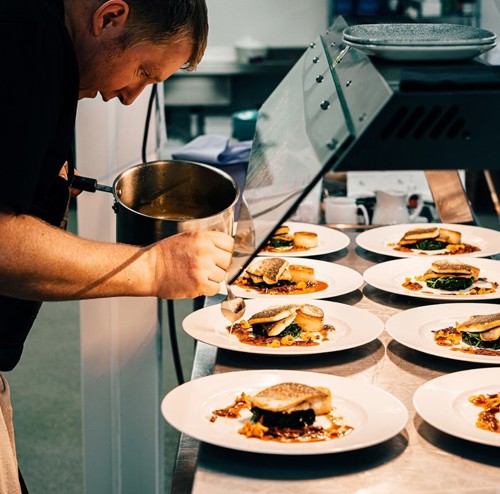
We continue to use as much locally sourced food as possible, with over 70% of produce coming from the local area. Meanwhile, much of our food is also procured on a seasonal basis, and we support sustainable food growth by using surplus fruit and vegetables where possible.
As well as plant-based and low-carbon food stadium-wide, with some menus now including food miles and origin maps, promoting transparency and sustainability.
The Club have also expanded vegan and halal options making eating at the Etihad easier for everyone attending.
MEASUREMENT & REPORTING
For thirteen years, we have utilised the DERFA GHG Protocol for our emissions impact measurement and reporting. The continuous use of the protocol ensures that the Club can benchmark its actions and results year-on-year with the credibility of the protocol in place.
The Club also measures all its actions and activities across the GHG Scopes 1, 2 and 3. This includes measured embodied carbon and retrospective measurement.
In 2025, the Club continued to use UEFA’s Carbon Calculator, enabling benchmarking across European football. The Club has began preparing for CSRD/DDD compliance, with full ESG reporting planned by 2027–28.
IMPACTFUL BIODIVERSITY
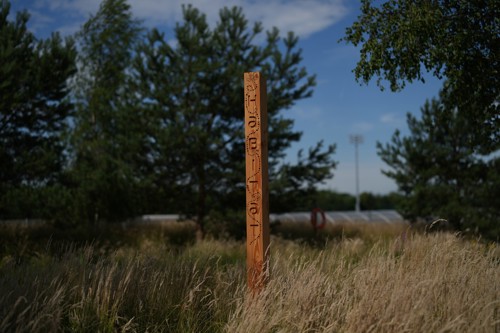
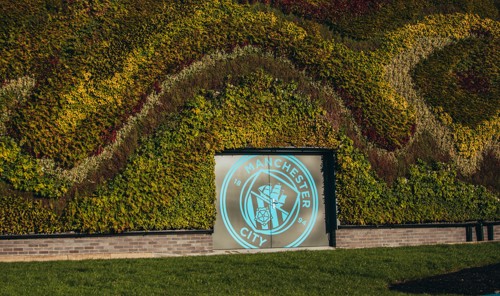
City Football Academy continues to meet the highest possible environmental standards – the gold standard under L.E.E.D. guidelines. Low carbon, low water and low waste measures are employed to minimise our impact on the environment and encourage local biodiversity.
The City Football Academy now supports 575 recorded species, including rare finds like the Bee Wolf and Yellow-legged Mining Bee. Meanwhile, the Mancgroves initiative continues to create a blue-green ring around the Etihad Campus, enhancing biodiversity and CO₂ sequestration.
Materials
The Club’s composting programme turns food, grass, and card into sustainable compost for our landscape. All imported compost continues to be peat-free.
Furthermore, ongoing construction projects, including the North Stand expansion and Women’s Training Centre, prioritise adaptive reuse, local procurement, and low-impact materials meaning over 15,577 tonnes of waste were reused or recycled.
LOCAL ACTIVE PARTICIPATION
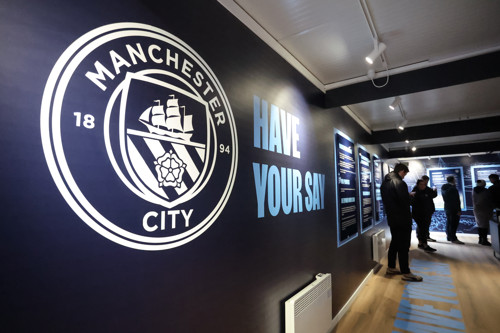
We cannot achieve our sustainable commitments alone, meaning that it’s essential that we engage people across all our operations.
This includes working with fans and community representatives to help achieve the change we need whilst working for practical and meaningful solutions to every issue, ranging from waste and congestion to energy and water.
In 2025 the Club supported over 200 unemployed local residents through adult learning programmes, with 50–80% securing employment.
The Etihad Stadium Jobs Fair welcomed 600 attendees, connecting them with 20 local employers, meanwhile the City Ambassadors and Schools Engagement Programme reached thousands of students, promoting careers in sport and entertainment.
Our neighbour’s meetings continued to reflect the changing nature and population of East Manchester, supporting continued and new engagement in opportunities created by the Club, in turn supporting ongoing, local regeneration.